Most stores running Facebook ads have two or three creatives in their active ad set. Each says something slightly different. All of them are aimed at everyone.
That's the problem. Not the creatives themselves, but the assumption behind them: that one version of your message is close enough for every type of person who might buy from you. Facebook's algorithm disagrees. It distributes ads based on predicted relevance, and a creative that speaks clearly to one specific person consistently outperforms one that tries to speak to many. The difference shows up in CPM, CTR, and ROAS.
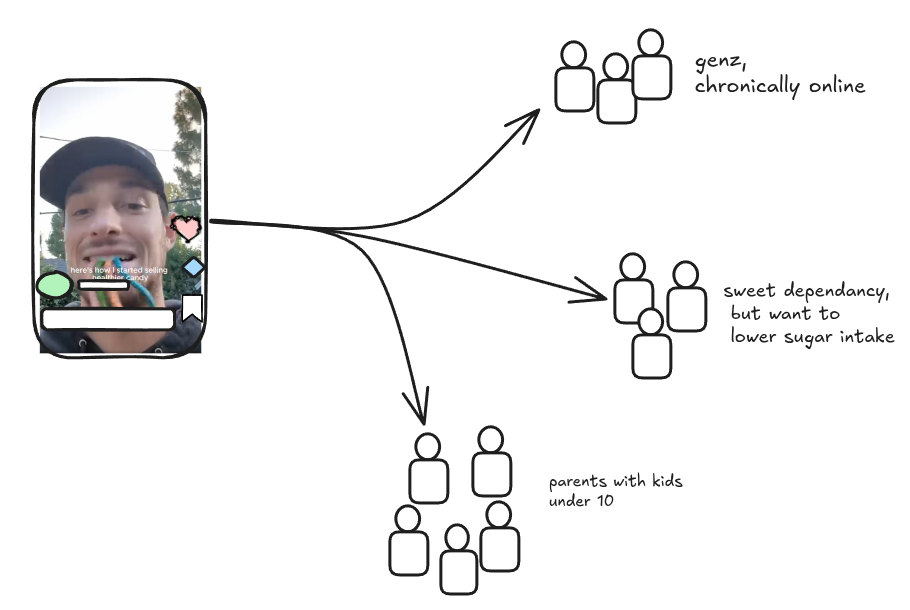
One generic creative, three personas, weak engagement across all of them.
What a persona actually means for ad creative
A persona is not a demographic segment. Age 25-40, female, interested in fitness is a targeting parameter. A persona is a specific combination of identity, problem, and desired outcome.
Consider a posture corrector. It could be bought by a remote worker with chronic lower back pain from sitting all day, a gym-goer trying to fix their deadlift form, a parent noticing their teenager is constantly hunched over a phone, or a physical therapist recommending something to patients. Each of these buyers has the same product need but a completely different context, vocabulary, and emotional entry point.
An ad that speaks to the remote worker's desk pain is invisible to the gym-goer. An ad framing posture as parental concern reads as irrelevant to the serious lifter. A persona is defined by who they are in relation to the problem, what language they use when they feel it, and what outcome they're actually chasing.
Why generic creatives get punished by the algorithm
Facebook measures engagement at the creative level. When you run one broad creative across a wide audience, some viewers recognize themselves in the message and engage. Most don't. The ones who don't create negative signals: they skip, scroll past, or hide the ad.
Those signals degrade your ad's delivery. Higher CPM, lower reach, fewer conversions at the same spend. The algorithm is trying to find people who'll engage, and a generic ad makes that search expensive. It has to show your ad to more people to find the ones it'll land with.
A persona-specific creative shortens that search. The message is built for a narrow profile. The people who match it respond faster and more clearly. Facebook finds the right delivery cluster sooner, CPMs drop, CTR rises, and conversion rate climbs. This is why two advertisers in the same niche with the same budget can have dramatically different ROAS numbers. It's rarely about targeting. It's almost always about how clearly the creative speaks to a specific person.
One creative vs. persona-based creatives
Single generic creative
- Broad message, weak resonance
- Diffuse signal for the algorithm
- High CPM to find engaged viewers
- Low CTR, high creative fatigue
- ROAS plateaus and degrades
Persona-specific creatives
- Precise message, instant recognition
- Tight engagement clusters for Facebook
- Lower CPM as delivery focuses
- Higher CTR from matched audience
- ROAS compounds as clusters tighten
The three-part persona creative framework
Building persona-based ad creatives is a structured process, not a guessing game. Each persona needs three elements addressed in every creative.
1. The recognition hook
An opening line or visual that makes this specific person feel seen. Not "back pain sufferers" but "nine hours at a desk and your lower back still hurts by 2pm." Recognition earns attention from the right person and filters out the wrong ones in the same instant.
This is where most generic creatives fail. They lead with the product or a broad benefit category. Persona-specific hooks lead with a situation the target person experiences daily. For a breakdown of what makes hooks work at a structural level, the bad vs. high-performance Facebook ad breakdown covers this in depth.
2. The persona-specific problem frame
The same product solves different problems for different people. Your gym-goer cares about form breakdown under heavy load. Your remote worker cares about chronic fatigue and long-term damage. The body copy should name their version of the problem, not a generic category. Features are fine. Features attached to the specific problem your persona is feeling are what convert.
3. The outcome that matches their goal
The remote worker wants to stop hurting. The gym-goer wants to lift heavier with less risk. The parent wants their kid to develop better habits. The outcome in your CTA and final frame should match what that specific persona is actually chasing. Changing only the hook but keeping the same generic outcome is a half-measure. The full arc, recognition through resolution, needs to map to one persona.
How Facebook distributes persona-specific creatives
When you run multiple creatives in a campaign, Facebook runs a distribution phase where it tests delivery across your audience. It's looking for signal: who clicks, who watches, who converts.
A persona-specific creative produces a strong, early signal cluster. The people it's built for respond consistently. Facebook reads that cluster, identifies the behavioral and interest profile of the responders, and focuses delivery there. Your CPM drops because delivery is tighter. Your CTR rises because the message is accurate. Your conversion rate improves because people arriving at your page already identify with the message before they click.
Running three persona-specific creatives in the same campaign gives Facebook three signal clusters to work with. It splits delivery between them based on who responds to what. This is why persona-based campaigns tend to improve over time while generic campaigns plateau and eventually degrade.
What this looks like in practice
Take a store selling a home gym cable machine. A single generic creative might say: "Level up your home gym. Full-body cable workouts from your living room." Technically accurate. Not specifically for anyone.
Three persona-specific creatives for the same product:
- For the apartment dweller: "No garage, no problem. Cable-resistance training that fits in 6 square feet, no noise, no damage to the floors." Hook, problem, outcome.
- For the ex-gym member: "You were paying $80/month for equipment you used three times a week. This replaces all of it for the cost of three months." The problem is financial and logistical waste.
- For the serious trainer: "Your cable setup at the gym took 15 minutes to adjust and someone was always on it. This is yours. All the time. Exactly how you set it." The problem is friction and access.
Three different emotional entry points. Same product. The algorithm now has three coherent groups to deliver to, each with a clear engagement pattern to learn from.
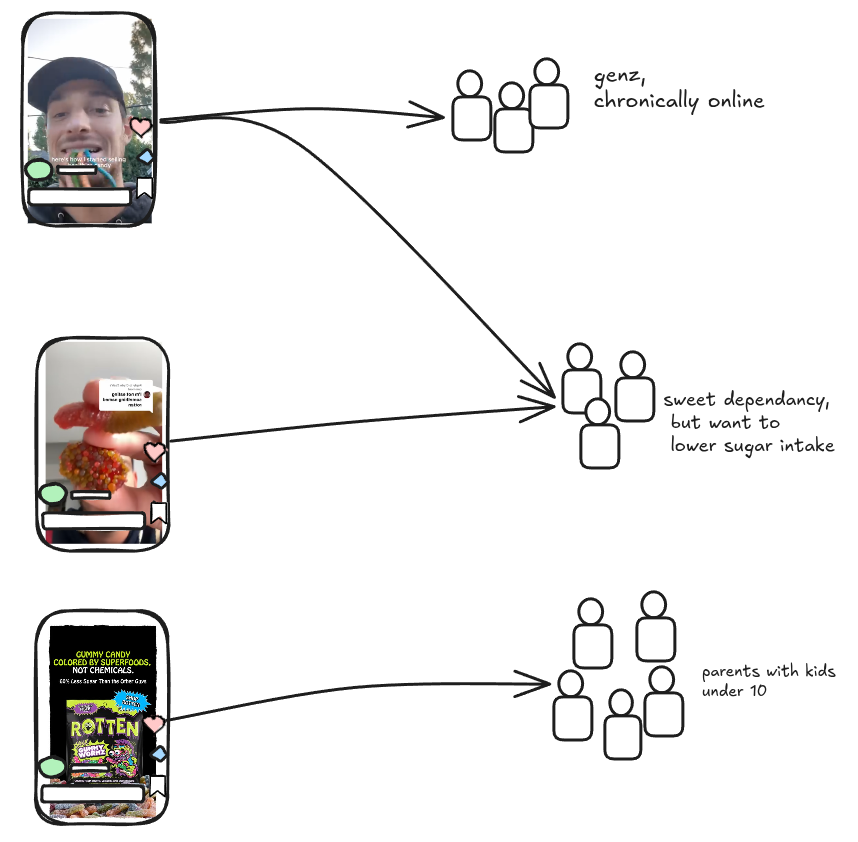
Each creative speaks to one persona. Facebook finds each cluster faster, CPMs drop, ROAS climbs.
Finding the right personas to build for
The best source for persona research isn't an audience template. It's the ads your competitors are already running.
An ad that has been active for 45-60 days in a competitive niche is validated. Someone is making money on it. The creative tells you which persona they're targeting: the hook names the problem, the body copy uses persona-specific language, the outcome in the CTA reveals what that person cares about.
Scan ten to fifteen long-running ads in your category. You'll see clusters: certain problems appear repeatedly, certain language patterns recur, certain outcomes keep showing up. Those clusters are your personas. The work has already been done by advertisers who spent money to validate it.
SpreshApp lets you search the Facebook Ad Library by keyword and category, filter by format, and identify which ads have been running longest. Sort by run time, read the copy on the top performers, and extract the persona signals. In most niches you'll identify three or four distinct personas within an hour of research.
Once you have the personas, building the creatives is structured work. You know the recognition hook, the problem frame, and the outcome for each one. A 90-day creative testing roadmap built from that research gives you a structured way to test persona variants against each other and systematically identify your winners.
The compounding effect on ROAS
Generic campaigns plateau. Once the algorithm has exhausted its ability to find signal in a broad message, performance stabilizes at a mediocre level. The only way to move it is to spend more.
Persona-based campaigns improve with time because the signal clusters get tighter. Each conversion teaches Facebook more about who responds to each creative. Your audience quality improves. CPMs drop. Conversion rates rise.
The research you do upfront to identify personas pays off through month six because the algorithm keeps getting smarter about delivery. One generic creative will not outperform three well-built persona-specific creatives against the same audience, given enough time to optimize. The algorithm is always trying to find the right message for the right person. Build creatives that make that job easy and it will reward you with cheaper delivery and higher ROAS.
For a library of what winning ad creatives actually look like in practice, the cross-platform swipe file guide covers how to organize and use competitor ad research as a reference for every brief you write.