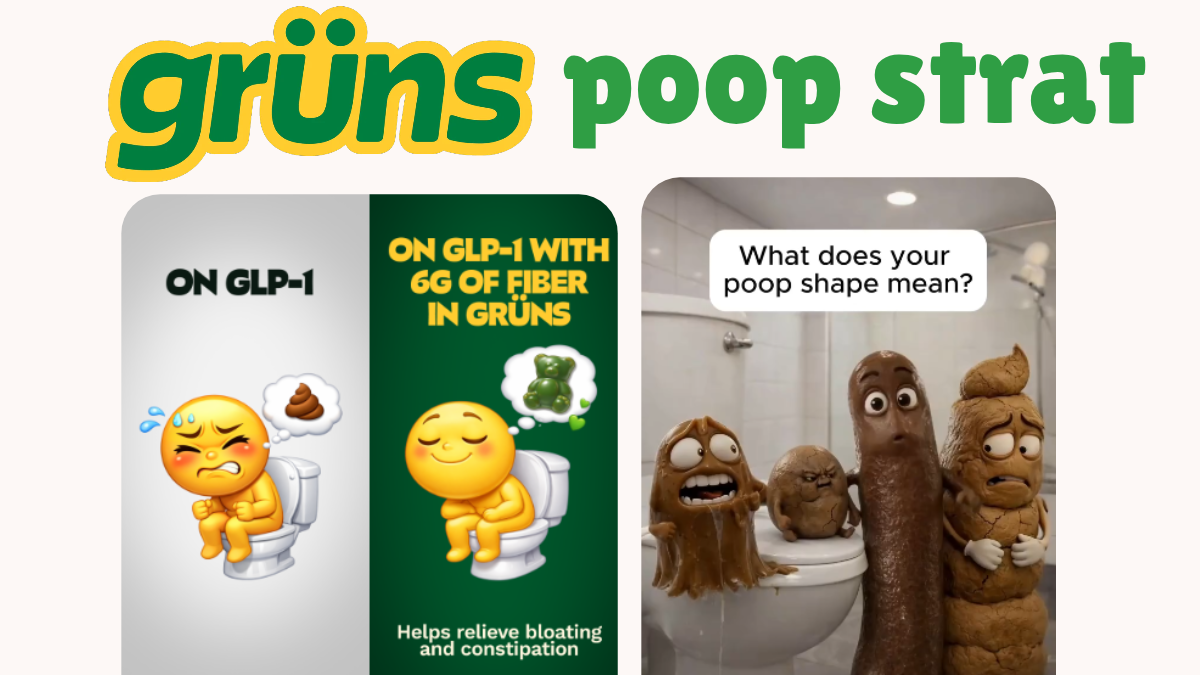
Scroll through a hundred TikTok ads in any niche and something becomes obvious fast: the ones that hold attention are not random. They follow recognizable structures. The hook lands in a specific way. The pacing shifts at predictable moments. The CTA arrives before you expect it. These are not accidents, they are patterns, and they repeat because they work.
Tiktok ad creative analysis gives you a shortcut that gut-feel briefing never will. When you can look at 50 winning ads and say "this hook format appears in 70% of them," you stop guessing what a creator should open with and start briefing from evidence. The brief gets tighter, the revision cycle shortens, and the creative that goes live has a structural foundation that guessing cannot provide.
This post breaks down the structural patterns that appear most consistently across high-performing TikTok ads, organized by the four elements that matter most: hook format, video length and pacing, audio and voiceover, and CTA structure. At the end, there is a brief framework you can take directly into your next creative session.
Hook patterns: the first two seconds
The first two seconds of a TikTok ad decide almost everything. According to TikTok for Business creative guidelines, ads that hook viewers in the first two seconds see significantly higher completion rates and conversion activity than those that take longer to establish a reason to keep watching.
Across high-performing ads, four hook formats show up repeatedly. The first is the bold claim open: a single declarative statement that either contradicts something the viewer believes or promises a specific, tangible result. "This $12 serum cleared my skin in three days" is a bold claim open. It creates immediate tension between what the viewer expects and what they are being told.
The second is the visual disruption hook, where the first frame shows something unexpected, a dramatic before-state, an unusual product use, or a scene that reads as organic content rather than advertising. The viewer's brain does not categorize it as an ad fast enough to scroll past. By the time the product appears, they are already three seconds in.
The third is the direct address open: "If you do X, watch this." It qualifies the viewer immediately and signals relevance before anything else loads. This hook format works especially well for products that solve specific, named problems because it filters for buyers and creates an implicit obligation to keep watching.
The fourth is the pattern interrupt via text overlay: a large, bold text card on screen in the first half-second that poses a question or shows a number. "I spent $300 testing this." The text does the stopping work before the audio even registers.
Video length and pacing patterns
The instinct to make TikTok ads short is correct, but the reasoning behind it is often wrong. Short videos perform well not because TikTok users have short attention spans, but because most TikTok ads waste seconds. When you remove the waste, the video gets shorter and stronger at the same time.
The sweet spot for direct-response TikTok ads sits between 15 and 30 seconds. TikTok Creative Center top-performing ad data consistently shows that ads in this range outperform both sub-15-second ads (which often lack enough information to convert) and 45-second-plus ads (which lose viewers before the offer lands).
Pacing follows a pattern too. High-performing ads tend to cut or change visual elements every two to four seconds. This is not about making things feel fast for its own sake. Each cut resets the viewer's attention and reduces the chance of a scroll. The edit creates micro-hooks throughout the video, not just at the beginning.
For product demonstration ads, there is a consistent structure: problem shown in first five seconds, product introduced between seconds five and ten, demonstration running from ten to twenty-five, offer and CTA in the final five seconds. Variations exist, but this skeleton appears with enough frequency to treat as a default starting point.
Audio and voiceover patterns
Audio in TikTok ads does more structural work than most briefs account for. The platform's user base has been trained on native content where audio is active and present, not background. Ads that treat audio as an afterthought, using generic royalty-free music under talking-head footage, tend to underperform ads where audio is part of the hook.
Voiceover-led ads perform consistently well across categories. A direct, conversational voice that narrates the video without reading from a script creates the same kind of attention signal as a peer recommendation. The viewer is not listening to an ad, they are listening to someone tell them something useful.
Trending audio works when it is relevant to the product, not when it is simply popular. An ad that pairs a viral sound with content that has nothing to do with that sound's emotional register reads as forced and loses trust fast. When trending audio genuinely matches the tone, though, it borrows credibility from the organic content that made the sound popular.
Silence used deliberately is also a pattern worth noting. Several high-performing ads open with a second or two of quiet before a voiceover or music hits, creating contrast against the constant audio stimulus of the TikTok feed. The silence is a hook.
For ad teams, the practical implication is that voiceover scripts and audio direction need to be part of the brief, not left to the creator's judgment on the day of filming. The structure of a good UGC script applies directly here: the voice needs to sound unconstructed even when every word is planned.
CTA structure patterns
The CTA in a high-performing TikTok ad is almost never a generic imperative. "Shop now," "Learn more," and "Click the link" appear in losing ads far more often than winning ones. What replaces them in ads that convert is a CTA that completes a specific loop opened earlier in the video.
If the hook opened with a problem, the CTA names the solution. "Stop dealing with X, get Y at the link below." If the hook was a bold result claim, the CTA invites verification. "See the before and after at the link." The CTA does not ask for a generic action. It gives the viewer a specific next step that follows logically from what they just watched.
Timing matters too. CTAs that arrive before the 25-second mark in a 30-second ad outperform those that appear only at the very end. The viewer needs a moment to act on the prompt before the video ends and the next one starts. Placing the CTA slightly before the closing frame gives them that window.
Urgency signals show up in winning ads, but they are specific rather than manufactured. "Only 200 left" or "This sale ends Friday" performs better than "Limited time offer" because it gives the viewer a concrete reason to act now rather than a vague warning that feels like every other ad they have seen.
The brief framework that emerges from these patterns
If you take the four pattern categories above and turn them into a brief checklist, you get a working framework for any TikTok ad brief. It does not replace creative judgment. It gives that judgment a structure to work within.
Hook specification: State the hook type (bold claim, visual disruption, direct address, or text interrupt) and write the exact opening line or describe the opening visual. Do not leave this to interpretation.
Length and pacing target: Set a target length between 15 and 30 seconds and specify a rough cut rhythm (every two to four seconds). Include a note on which moments are visual resets versus narration-only.
Audio direction: Specify voiceover tone, script or key talking points, whether trending audio should be used, and how the audio should behave in the opening two seconds. If silence is the hook, say so explicitly.
CTA copy and placement: Write the exact CTA line. State the second it should appear. Connect it explicitly to the hook. Avoid generic imperatives.
A brief built on this framework is also much easier to evaluate against real ads. You can look at a competitor's high-performing creative and identify which of these four elements it got right, then carry those specific choices into your own brief rather than trying to reverse-engineer a vague sense of "why this worked."
How to find your own pattern library
The patterns above are general. Your niche has its own specific patterns that will be more useful than any general list. The only way to find them is to look at enough winning ads in your category to see what repeats.
That means building a system for collecting and tagging high-performing TikTok creatives over time. Ad hoc screenshots and saved videos scattered across a phone camera roll do not support pattern analysis. You need enough examples, organized well enough, that you can filter by hook type or product category and actually compare what you are seeing.
Kantar's research on creative effectiveness consistently shows that the best-performing ads draw on a deep understanding of the creative norms in their category before they deliberately break them. You need the pattern library before you can make a considered decision about when to follow the pattern and when to deviate.
This is where SpreshApp becomes a practical tool for creative strategists. Instead of manually saving TikTok ads and hoping you can find them later, you can research ads across both TikTok and Facebook in one place, tag them by hook type, product category, or creative format, and search them when you are sitting down to write a brief. The pattern library that emerges from that collected data is specific to your niche, recent, and actually searchable.
The creative strategists who brief well are not more creative than the ones who guess. They have more data. They have seen more of what works and built a system for carrying those observations into the next brief. TikTok ad creative analysis is not a one-time exercise, it is a habit, and the faster you build the infrastructure for it, the compounding effect on brief quality is real.
Winning TikTok ads follow identifiable structures. The hook arrives fast, the pacing holds attention through deliberate cuts, the audio is treated as a first-class creative element, and the CTA closes the loop the hook opened. Brief to those patterns, and the starting point for every creative is already better than the one that started from nothing.